Modelling as a hobby, not a career
Most people who want to model will never do it for a living. That is not a failure, and it is not a reason to stop. There is a good deal of enjoyment, and a modest income, in the version of modelling that actually exists near where you live.
The industry most people picture
When someone tells me they want to be a model, they usually have one picture in their head. Agencies, campaigns, fashion weeks, a name other people recognise. That industry is real, it is small, and it takes very few people. The ones it does take tend to be found young, fit narrow physical requirements, and live where the work is. If you are reading this in Suffolk, the odds are not in your favour, and no amount of effort changes the arithmetic.
I am not saying this to put anyone off. I am saying it because a lot of people spend money and years chasing that version, get nowhere, and conclude they were not good enough. Usually they were fine. They were aiming at the wrong target.
The industry that actually exists near you
There is a second version, and it is far bigger than most people realise. Every county has photographers who need people in front of the camera. Portrait photographers building a portfolio. Hobbyists who have got serious. Small businesses that need a face for their website. Hair salons, clothing brands, gyms, wedding suppliers. Local creative groups running themed shoots for the fun of it.
None of that is glamorous, and none of it will make you famous. It is real work, it is regular if you are reliable, and it pays. Models I work with locally pick up shoots through word of mouth, through PurplePort, and through knowing other models. A few of them turn over a useful amount across a year. Not a living, in most cases. A useful amount.
That is the version worth aiming at. Treat it as something you enjoy that sometimes pays, rather than a career you are failing at, and the whole thing becomes a great deal more pleasant.
TFP is how you get good
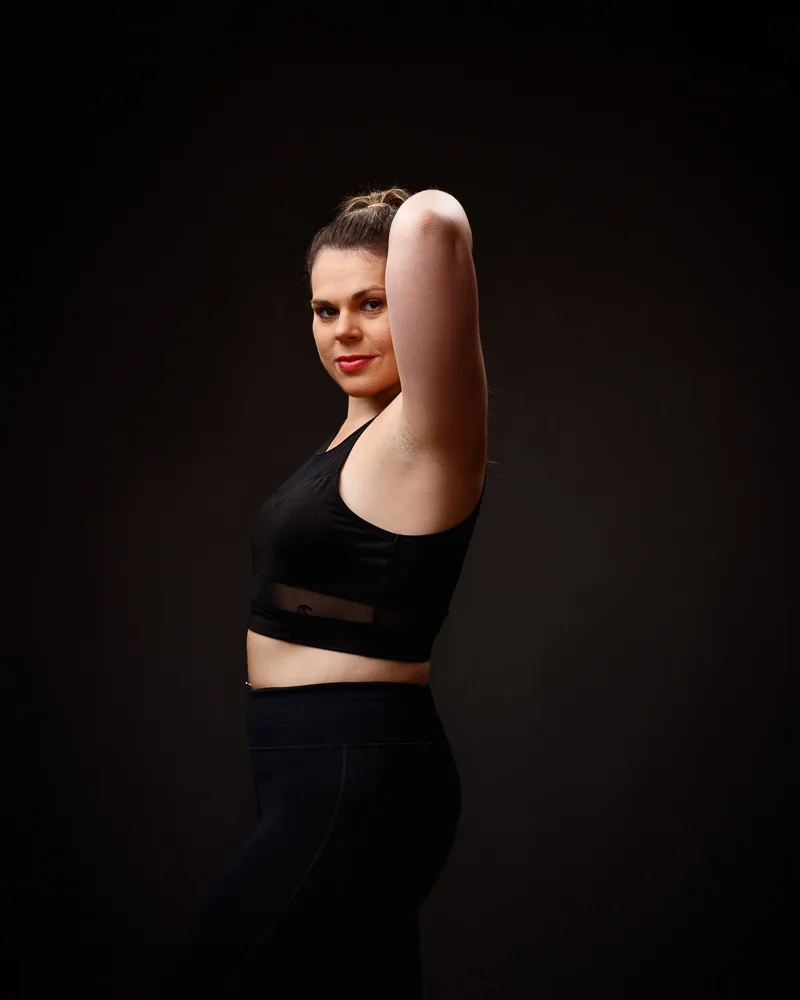
TFP means time for print. Nobody pays anybody. The photographer gets images for their portfolio, you get images for yours, and you both spend an afternoon making something.
New models sometimes see TFP as being taken advantage of. I understand why, though I think it is the wrong way round at the start. Being photographed well is a skill, and skills need repetition. Knowing where your hands go. Knowing what your face is doing without a mirror to check. Holding a position while somebody adjusts a light. Taking direction without taking it personally. Recovering when a shot is not working. None of that arrives on its own, and none of it can be learned by reading about it.
TFP is how you get the repetitions. It is also how you find out which photographers you want to work with again, and how you build a set of images good enough that someone would pay for that standard.
You are allowed to charge
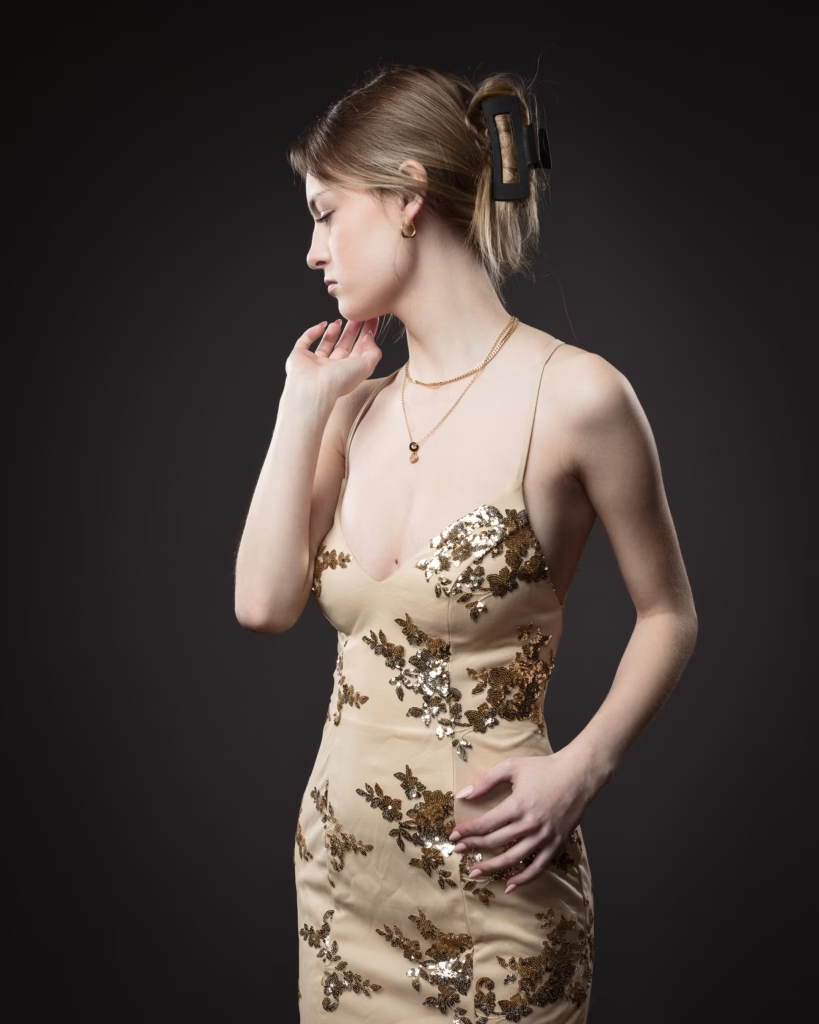
At some point you will be good enough that a photographer is getting more out of the shoot than you are. That is when charging makes sense.
Plenty of models never get comfortable saying it. Others assume they should be paid from the very first shoot, which tends not to go well. The honest position sits somewhere in the middle. Your time has a value, you are allowed to ask for it, and you are also allowed to do a shoot for nothing because the idea appeals to you. Both are fine. Doing paid work does not mean every shoot has to be paid.
What matters is that you know you have the option, and that you are choosing rather than assuming.
The tax bit that nobody mentions
This is the part I see ignored most often, usually on the basis that it does not happen often enough to count.
If you are paid for shoots, that is income, and HMRC treats it like any other self-employed income. There is a trading allowance of £1,000 a year. That figure is gross, so it is what you were paid, not what you were left with after travel and outfits. If your total from all side income stays under £1,000 across the tax year, there is nothing to report and nothing to pay.
Go over £1,000 and you need to register for Self Assessment. The deadline is 5 October following the end of the tax year in which you went over. For the 2025/26 tax year, that means 5 October 2026.
One change is worth knowing about. From the 2027/28 tax year the reporting threshold rises to £3,000, so income between £1,000 and £3,000 will no longer need a full return. The £1,000 you can earn tax free does not change.
TFP is not income. No money changes hands, so there is nothing to declare.
I am a photographer, not an accountant. Please do not take any of the above as advice for your own situation. Check the current position on the HMRC website, and speak to an accountant if you are earning enough for it to matter.
Knowing how good you are
There is a pattern psychologists call the Dunning-Kruger effect. The short version is that when you know very little about something, you have no way of measuring how little you know, so you tend to overrate yourself. As you learn more you start to see the size of the thing, and your confidence drops before it climbs back.
I was exactly that when I started in photography at fourteen. I thought I was good. Looking at those pictures now, I was not. It took years to understand how much I did not know, and I am still finding out.
Modelling works the same way. Someone with three shoots behind them can genuinely believe they have it worked out, because they have not yet met the situations that would show them otherwise. There is nothing shameful in that, and it is not a character flaw. It is what the early stage looks like from the inside.
The models I most enjoy working with are not the ones who arrive certain. They are the ones who ask what I am trying to achieve, try something they have not tried before, and take a direction as information rather than criticism. Some of them have been doing this for years and still talk about what they are working on. That is the tell.
If you want a shortcut, it is this. Assume you have more to learn than you think, then go and do the shoots that will teach you.
What I would say to someone starting out
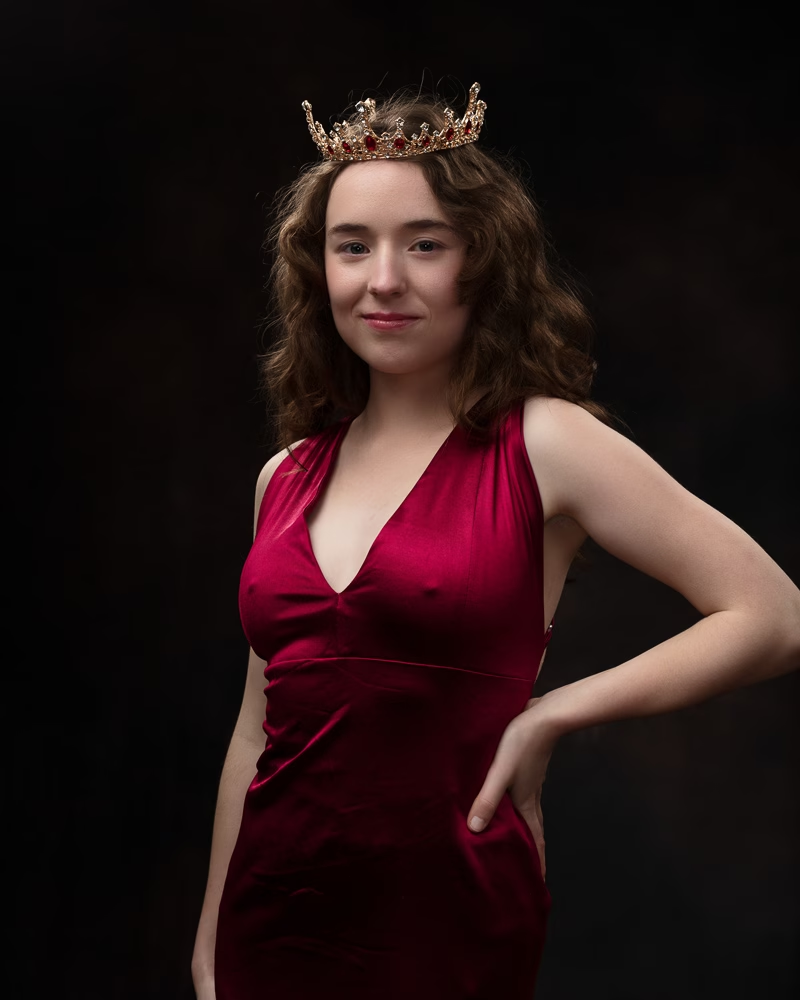
Do it because you enjoy it. Work with photographers near you, and do plenty of TFP while you are learning. Build a set of images you would be happy for anyone to see. Charge when you are worth charging for, and keep a note of what you were paid. Stay safe, and read the safety page before a first shoot with someone new.
If it turns into something bigger, that is a bonus. If it stays a hobby that occasionally pays for itself, that is not second best. That is what it is for most people who do this, including a lot of the good ones.
Thinking about a shoot?
I run TFP sessions and paid portfolio shoots from the studio at Rendlesham. Everything here is safe for work, chaperones are always welcome, and you never have to ask.